Industrialised Construction vs Modular Construction: What’s the Difference?
1 Why this idea needs clarifying
“Industrialised construction” is a term that is appearing more frequently across construction, consultancy and policy discussions.
It is often used to describe a more advanced, efficient or modern way of building. The language suggests consistency, precision and a move away from traditional site-based construction. In that sense, it sounds reassuring, particularly for estates teams under pressure to deliver projects more quickly and with greater predictability.
However, the term itself does not describe a specific construction system. It describes an approach.
This is where confusion begins.
Because “industrialised construction” is often used interchangeably with terms such as modular construction or off-site construction, it can give the impression that these are all the same thing. In practice, they are not.
For estates teams and procurement professionals, this distinction matters. The reassurance implied by the term can break down when projects move from concept into delivery and long-term use.
2 The common assumption
A common assumption is that industrialised construction is simply another way of describing modular construction.
This feels logical. Both involve off-site manufacturing, both are associated with faster delivery, and both are often presented as alternatives to traditional construction.
Because of this overlap, the terms are frequently used interchangeably in early-stage discussions.
However, this assumption is incomplete.
Industrialised construction is not a specific method. It is a broader concept that describes how construction is delivered using manufacturing principles.
Modular construction, by contrast, is a specific type of system within that approach.
When the distinction is not made clearly, estates teams can believe they are comparing delivery approaches when they are actually comparing very different structural systems.
3 What actually determines this in reality
In practice, the difference between industrialised construction and modular construction comes down to how buildings are structured and assembled.
Industrialised construction describes a shift towards standardisation, repeatability and factory-based production. It can include a range of systems, from panelised structures to volumetric modules and pre-manufactured components.
Modular construction is one of those systems.
In volumetric modular construction, buildings are delivered as complete units or modules. These modules are manufactured in a factory and then assembled on site. This creates a high level of factory control, but also introduces structural constraints that are defined early in the design process.
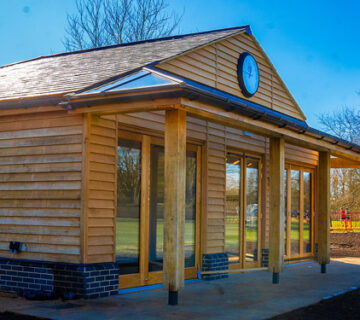
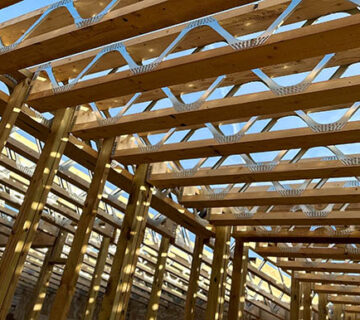
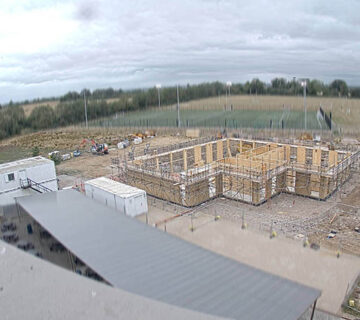
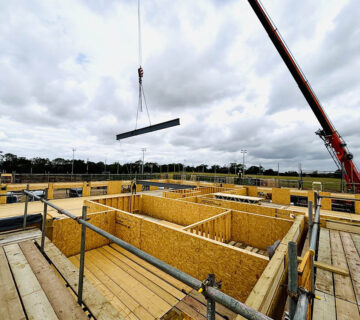
Panelised construction, which also sits within industrialised construction, follows a different logic. Structural wall and roof panels are manufactured off site and assembled on site on traditional foundations. Internal layouts, services and finishes are completed using conventional methods.
Both approaches apply industrialised principles, but they behave very differently over time.
The key point is that outcomes are determined by the structural system, not by the label used to describe it.
4 How this plays out over time
At the point of delivery, different industrialised construction approaches can appear similar.
Both modular and panelised systems can offer controlled manufacturing, reduced on-site activity and shorter construction programmes. At handover, buildings may meet the same performance standards and provide comparable environments.
Over time, differences begin to emerge.
In volumetric modular systems, the structural logic is fixed early. Modules are designed, manufactured and assembled as complete units, which can make later changes more complex. Adjustments to layout, extension or integration with existing buildings often require working within predefined structural constraints.
In panelised systems, the building is assembled on site from structural components. This can allow greater flexibility in how internal spaces are configured and adapted over time. Extensions, alterations and phased development can often be integrated more easily because the structure follows more familiar construction logic.
These differences are not always visible at handover, but they become more significant as estates evolve.
5 Why this matters (Estates + Procurement)
For estates teams, the distinction affects how buildings perform over their lifecycle.
Buildings are rarely static. Requirements change as student numbers fluctuate, teaching methods evolve and estates expand or reconfigure. The ability to adapt a building without major disruption becomes increasingly important over time.
If the structural system limits flexibility, estates teams may face constraints that were not apparent during procurement.
For procurement teams, the issue is one of risk and long-term cost exposure.
Decisions made early in the project define what options remain available later. Systems that appear efficient at the point of delivery may introduce constraints that lead to more complex or costly interventions in the future.
Understanding the difference between a broad concept such as industrialised construction and the specific systems within it helps procurement teams assess not just delivery, but long-term implications.
6 Where construction method fits
Construction method sits at the centre of this distinction.
Industrialised construction describes a way of thinking about delivery. Modular and panelised systems describe how that thinking is applied in practice.
This is why focusing only on terms such as “industrialised” or “modular” can be misleading. The more useful question is how a particular construction method behaves over time.
Panelised construction, for example, applies industrialised principles while retaining a close relationship with traditional construction methods. Buildings are assembled on site on traditional foundations, which can support integration, adaptation and phased development.
This is not a question of one approach being better than another. It is about understanding how different systems align with long-term estate strategy.
7 Where to go deeper
The distinction between industrialised construction and modular construction is not simply a matter of terminology.
It reflects the difference between a broad approach and the specific systems that sit within it.
For estates teams, the more useful question is not whether a building is described as industrialised, but how the chosen construction method will perform over time.
To explore how different systems compare in practice, you can review:
Panelised MMC2 vs Volumetric Modular Buildings →
To clarify specific terminology, it is also useful to explore:
What is Industrialised Construction? →
What is MMC Category 2? →
Understanding how construction approaches are described is only the starting point.
The related guides and explanations explore how different systems behave in practice and how those differences influence long-term estate decisions: GUIDES →
Get in touch
At The Qube, we believe in delivering more than what is asked by our clients.
If you have a project in mind or would like to talk with one of our experts on how best to utilise your space, contact the team today.