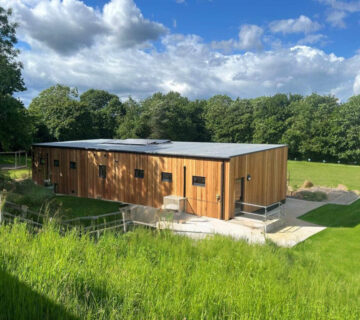
The Modular Building Mistake Everyone Is Still Making
Across the UK, modular construction continues to divide opinion.
Some estates teams see modular buildings as the future of faster, more predictable delivery. Others approach the subject with caution, shaped by past experience that did not deliver what was promised.
What often gets missed in these discussions is a simple but critical point:
Not all modular buildings are the same.
At The Qube, we see this misunderstanding delay decisions, limit design options and create unnecessary risk on projects that need flexibility and long-term performance.
Why modular buildings still raise concerns
When decision makers hesitate around modular buildings, it is rarely theoretical. It usually comes from lived experience on real projects.
Common concerns include:
- Modular buildings feeling temporary despite being intended as permanent
- Layouts that could not adapt as needs changed
- Key decisions being locked in too early
- Performance issues emerging after handover
- A sense that once modules arrived on site, options were limited
These experiences matter. They shaped how modular construction is viewed across education, commercial and public sector estates.
How volumetric modular shaped the modular reputation
Volumetric modular buildings are manufactured as complete room-sized units in a factory and delivered to site largely finished. This approach prioritises speed, repeatability and off-site efficiency.
In the right context, that can work well.
But volumetric systems also introduce constraints that many estates teams encountered first-hand:
- Buildings must conform to fixed module dimensions
- Site layouts often have to adapt to the modules
- Design changes become expensive once manufacturing begins
- Complex or constrained sites are harder to accommodate
Because volumetric modular dominated early adoption in the UK, its limitations became closely associated with the term “modular buildings” itself.
This misunderstanding usually comes from treating all modular systems as the same. We break this down clearly in our comparison of panelised MMC2 vs volumetric modular buildings.
That perception has lingered, even as other modular construction methods have evolved.
Why panelised MMC2 is fundamentally different
Panelised MMC2 construction still uses off-site manufacture, but it behaves very differently in practice.
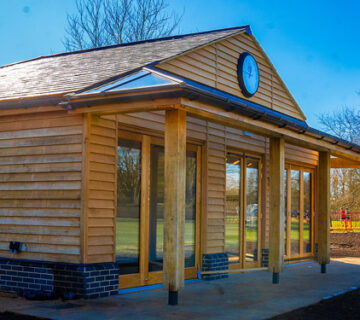
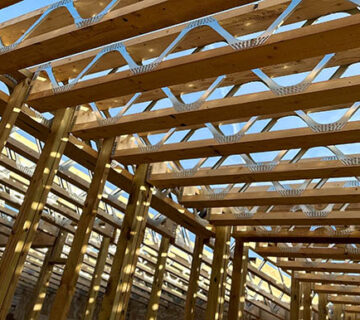
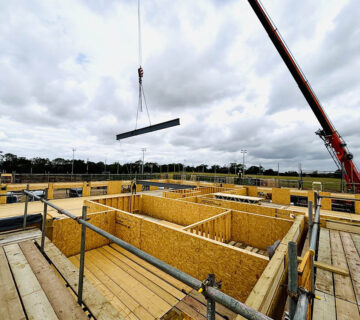
Rather than delivering completed rooms, panelised modular buildings are assembled from precision-manufactured wall, floor and roof panels on site. This changes how buildings respond to real-world constraints.
The key difference is flexibility.
Panelised MMC2 allows:
- Building layouts to respond to site conditions
- Design decisions to remain adaptable for longer
- Easier integration with existing buildings
- Future expansion or reconfiguration without major disruption
For estates teams comparing modular building systems, this distinction often reframes the entire decision.
Where confusion between volumetric and panelised causes problems
When volumetric modular and panelised MMC2 are grouped together under the same “modular” label, decision making becomes distorted.
This often leads to teams:
- Ruling out modular buildings too early
- Assuming layouts are fixed when they are not
- Overestimating future constraints
- Missing opportunities for phased development
As a result, panelised MMC2 projects are sometimes judged against the limitations of volumetric modular, rather than on their own merits.
Why this matters for real modular building projects
Modern estates teams are under pressure to deliver buildings that perform long after completion.
They need modular buildings that offer:
- Predictable delivery programmes
- Strong long-term energy performance
- Flexibility as operational needs change
- A permanent feel that integrates into the wider estate
Judging all modular construction through a volumetric lens undermines these goals and can lead to cautious decisions that reduce options unnecessarily.
Panelised MMC2 was developed specifically to address the challenges earlier modular systems exposed.
Is panelised MMC2 right for every modular project?
It is important to be clear.
Panelised MMC2 is not the right solution for every building, every site or every brief. Modular construction should never be selected by default.
The real question is not whether modular buildings should be used, but which modular system fits the project and why.
That judgement can only be made once volumetric and panelised approaches are properly understood as different construction methods, not variations of the same thing.
A more informed modular buildings conversation
The modular construction sector is maturing.
More clients are separating volumetric and panelised systems rather than treating modular as a single category. This leads to clearer conversations, better design outcomes and buildings that perform as intended over the long term.
When modular buildings are assessed accurately, panelised MMC2 often emerges as a strong option for projects that require adaptability, longevity and site responsiveness.
Final thought
If modular buildings have disappointed you in the past, that experience is valid. But it should not automatically define what is possible today.
The most common modular building mistake still being made is judging all modular construction as ‘the same’.
Frequently Asked Questions About Modular Buildings
What is the difference between volumetric and panelised modular buildings?
Volumetric modular buildings are delivered as complete room-sized units, while panelised modular buildings are assembled on site from factory-manufactured panels. Panelised systems allow greater flexibility in layout, site response and future adaptation.
Are panelised modular buildings permanent?
Yes. Panelised MMC2 buildings are designed as permanent structures and can integrate seamlessly with traditional buildings. They are not temporary or short-term solutions.
Is MMC2 the same as modular construction?
MMC2 refers specifically to panelised construction within the UK’s Modern Methods of Construction framework. It is one form of modular construction, but behaves very differently to volumetric systems.
Are panelised modular buildings more flexible than volumetric?
In most cases, yes. Panelised MMC2 allows design changes later in the process and supports future expansion or reconfiguration more easily than volumetric modular systems.
Should modular buildings be used on every project?
No. Modular construction should be assessed on a project-by-project basis. The key is choosing the right modular system for the site, brief and long-term requirements.
Get in touch
At The Qube, we believe in delivering more than what is asked by our clients.
If you have a project in mind or would like to talk with one of our experts on how best to utilise your space, contact the team today.